Films That Flopped in Cinemas and Became Classics Later — Fifteen Verdicts the Audience Overturned
Andaz Apna Apna was pulled from screens as a failure and is now the most quoted Hindi comedy ever made. Mera Naam Joker mortgaged R.K. Studios. Kaagaz Ke Phool ended Guru Dutt's directing career. Fifteen Indian films whose box office verdict and whose reputation point in opposite directions — and where to stream every one of them.

A box office verdict is a measurement of one week in one year. It records how many people bought a ticket while the film was in cinemas, against how much it cost to make and sell — nothing more. It is not a measurement of whether the film was any good, and it has never claimed to be. The films below are the cases where those two things came apart completely, and where the correction took decades.
Both halves of each entry are settled, which is why this list can be written at all. The commercial result is a matter of record: a trade verdict filed at the time, a distributor's loss, a studio mortgaged. And the reappraisal has now had long enough to stop moving — these are not films currently being reassessed, they are films that were reassessed twenty or forty years ago and have stayed there since, in critics' polls, on syllabi, in restoration prints and 4K re-releases. Nobody is going to decide in 2035 that Kaagaz Ke Phool was overrated.
What is worth noticing across fifteen entries is how consistent the mechanism is. Almost none of these films failed because audiences disliked them; they failed because they reached the wrong number of people in the wrong four weeks. Jaane Bhi Do Yaaro was off screens within a week on an NFDC release that could not get it into more than a handful of halls. Andaz Apna Apna went out through a new distributor with no publicity behind it. Dil Se.. was a flop in India and the first Indian film to enter the UK top ten. The audience that eventually made these films canonical mostly found them somewhere other than a cinema — on Doordarshan, on pirated VHS, on satellite reruns, and now on the platforms listed against each entry.
1/15Kaagaz Ke Phool
Film · 1959 · Hindi · Feb 1, 1959
Prime VideoShemarooMeReleased 2 January 1959 At release Box office bomb Since No. 11, BFI Top 20 Indian Films (2002) Also No. 160, Sight & Sound greatest films (2002) The most expensive failure in this list's history is not measured in rupees. Kaagaz Ke Phool was India's first film in CinemaScope, and it lost money so comprehensively that Guru Dutt never put his name on a directed film again — Sahib Bibi Aur Ghulam and Baharen Phir Bhi Aayengi both went out under other directors' credits, because, as the record has it, he had concluded his own name was poison at the box office. His writer Abrar Alvi's explanation of the failure has never been improved on: audiences struggling to put two meals on the table could not be asked to care about a director's private heartbreak. Forty years later it was at number 11 on the BFI's list of the best Indian films ever made and number 160 in Sight & Sound's greatest films of all time. It is the definitive case, and the one that cost the most.
2/15Teesri Kasam
Film · 1966 · Hindi · Jul 1, 1966
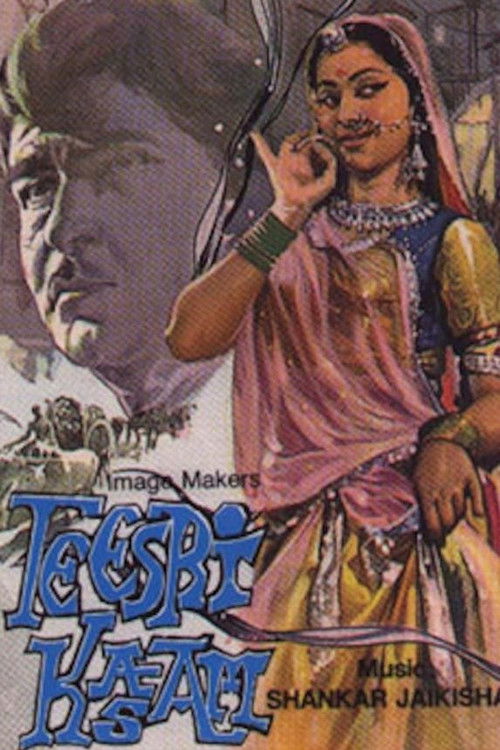
Released 1966 At release Commercial failure Since National Film Award for Best Feature Film The lyricist Shailendra produced exactly one film and it ruined him. Basu Bhattacharya's adaptation of a Phanishwar Nath Renu story, with Raj Kapoor as a bullock-cart driver and Waheeda Rehman as a nautanki performer, was well received by critics and did no business at all. It won the National Film Award for Best Feature Film the following year; Shailendra did not live long enough for the recovery to mean anything to him. What makes it the strangest entry here is where it ended up: the story of the film's making became a chapter in the CBSE Class 10 Hindi textbook, which means a film almost nobody watched in 1966 is now studied by every tenth-grader in the country.
3/15Mera Naam Joker
Film · 1970 · Hindi · Dec 18, 1970
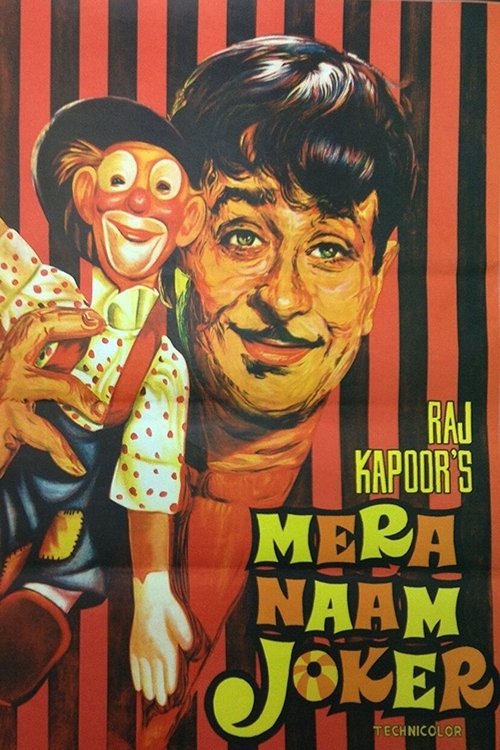
Zee5Released 18 December 1970 At release Critical and commercial failure Soviet release 73.1 million admissions Since Filmfare Best Director, 1972 Six years of work, 248 minutes long, two intervals, and a failure severe enough that Rishi Kapoor's account of it is simply that every asset the family had was mortgaged to get it released. R.K. Films took years to recover, and Raj Kapoor made Bobby next largely to refill the account. The reappraisal came from two directions at once. Abroad, the Soviet distributor split it into three parts for a 1972 release and drew 73.1 million admissions, at the time the highest price ever paid for an Indian film's rights. At home, an abridged cut in the 1980s finally found the audience, and the film it had been derided for being — indulgent, autobiographical, too long — is now the reason it is read as Kapoor's most honest work. It also won him the Filmfare for Best Direction while it was still officially a disaster.
4/15Sadma
Film · 1983 · Hindi · Jul 8, 1983
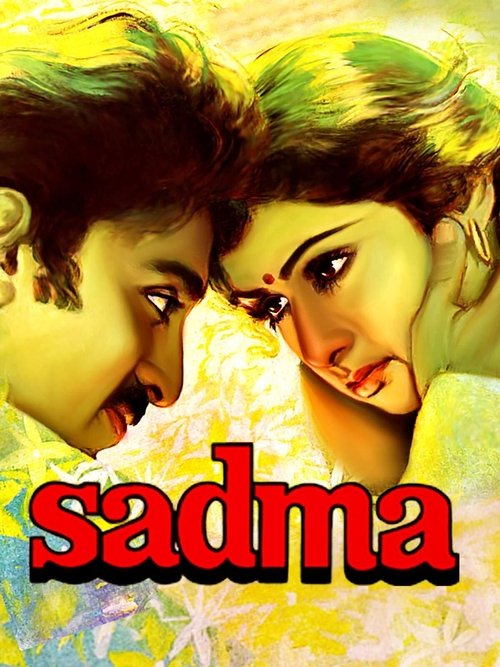
Released 8 July 1983 At release Commercial failure Since Cult status; climax in CNN-IBN's 50 most memorable scenes Balu Mahendra remade his own Tamil film Moondram Pirai in Hindi with the same two leads, and the Hindi version failed where the Tamil one had not. Kamal Haasan and Sridevi were both nominated at the Filmfare awards and neither the performances nor the reviews were the problem; a story about a woman with retrograde amnesia regressed to childhood, and the man who takes her in, was simply not something the 1983 Hindi market had a shelf for. The last three minutes are now routinely named among the greatest scenes in Indian cinema, and the film is the one people reach for first when they want to argue that Sridevi was the finest actor of her generation. It took forty years and a great deal of television for that to become the consensus.
5/15Jaane Bhi Do Yaaro

Film · 1983 · Hindi · Aug 12, 1983
JioHotstarReleased 12 August 1983 Budget Rs 8-9 lakh At release Off screens within a week Since National Award for Best Debut Direction; restored re-release 2012 Made for eight or nine lakh rupees with a cast of unknowns who are now the entire character-actor canon — Naseeruddin Shah, Om Puri, Pankaj Kapur, Satish Shah, Neena Gupta, Satish Kaushik, Ravi Baswani — and reportedly out of cinemas inside a week, because an NFDC release in 1983 could not get a satirical black comedy into more than a handful of urban halls. Kundan Shah won the National Film Award for Best Debut Direction for it, which tells you the failure was never about quality. Everything that happened afterwards happened on television and video: the Mahabharata sequence at the end is probably the single most replayed comic set piece in Hindi cinema, and a digitally restored print premiered in November 2012 to a reception the 1983 release never got.
6/15Thoovanathumbikal
Film · 1987 · Malayalam · Jan 3, 1987
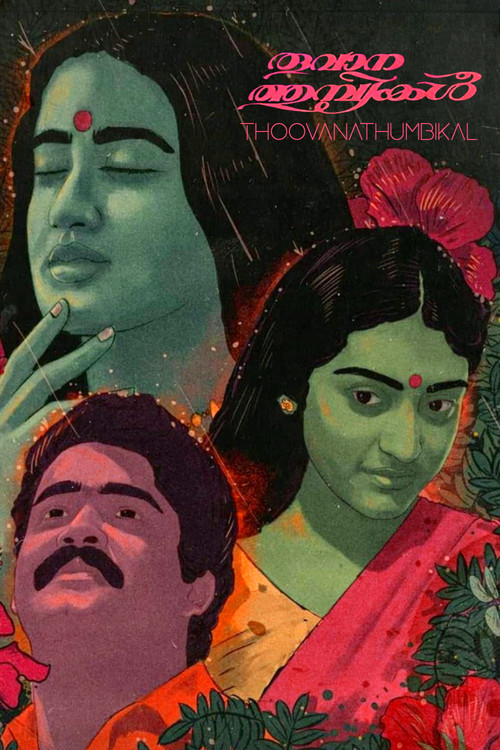
Prime VideoJioHotstarReleased 31 July 1987 At release Commercial failure Since No. 8, IBN Live centenary poll of greatest Indian films (2013) Malayalam cinema's clearest case, and the most extreme gap on this page between the verdict and the standing. Padmarajan's film with Mohanlal as Jayakrishnan failed commercially in 1987 and by 2013 was ranked eighth among the greatest Indian films ever made, across every language, in IBN Live's centenary poll. In Kerala it long ago stopped being a film and became a set of reference points — the rain, the Clara scenes, the two halves of a man who cannot reconcile the village and the city. Almost every Malayalam director working now has been asked about it in an interview. The audience that made all of that happen watched it on television.
7/15Andaz Apna Apna
Film · 1994 · Hindi · Apr 11, 1994
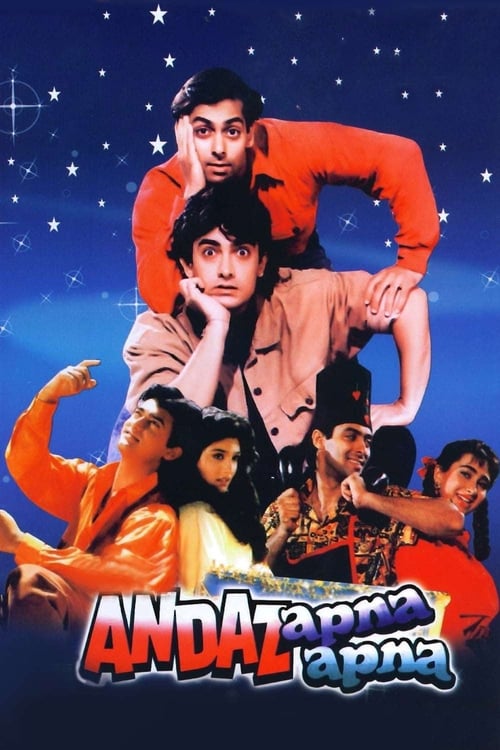
Prime VideoJioHotstarMX PlayerReleased 4 November 1994 India net Rs 5.30 cr Verdict Average Since 4K restoration re-released, April 2025 The one everybody names. Rajkumar Santoshi's comedy with Aamir Khan and Salman Khan came out in November 1994 into a year that Hum Aapke Hain Koun..! had already taken, went out through a distributor with no publicity behind it — Santoshi's own explanation — and finished on Rs 5.30 crore with an Average verdict, which for a Rs 2.9 crore film with two of the biggest stars in the country was read at the time as a failure. Then satellite television got hold of it. Thirty years on, its dialogue is a shared language, it was voted the second-best Hindi comedy ever made in a 2014 Indian Express poll, and in April 2025 a 4K restoration was put back into cinemas — thirty-one years on, a film that could not hold a screen in 1994 was worth a theatrical release on its own. Nothing about the film changed. The distribution did.
8/15Iruvar
Film · 1997 · Tamil · Jan 14, 1997
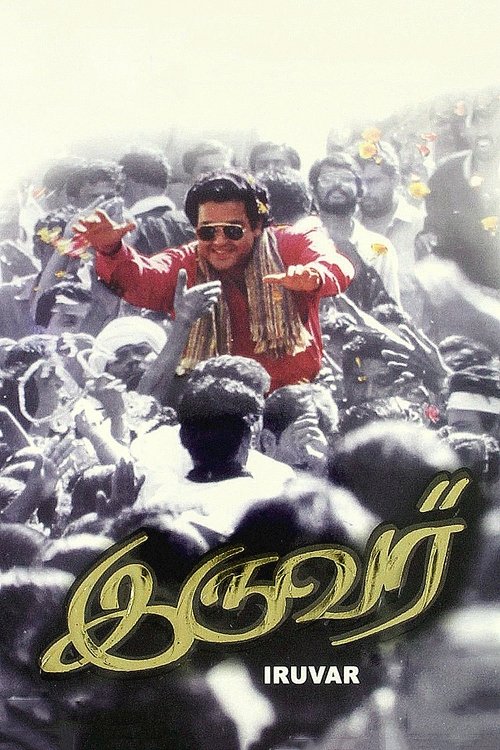
Prime VideoReleased 14 January 1997 At release Hit by the 1997 FEFSI strike Since Sight & Sound 2012 greatest-films ballot Also First Tamil film screened at the Academy Museum, 2025 Mani Ratnam's roman-a-clef about the friendship and rivalry between a film star and a screenwriter who both end up running Tamil Nadu was released in January 1997 into a FEFSI strike that wrecked its run, and it did not recover. It won two National Film Awards, went to Toronto, and then sat quietly for fifteen years. Rachel Dwyer put it on her Sight & Sound ballot in 2012; Ratnam himself named it his best work in 2013; Baradwaj Rangan has argued the same for years; and in April 2025 it became the first Tamil film screened at the Academy Museum of Motion Pictures in Los Angeles. It is now more or less impossible to find a serious list of the best Indian films of the 1990s that leaves it out.
9/15Dil Se..
Film · 1998 · Hindi · Aug 22, 1998
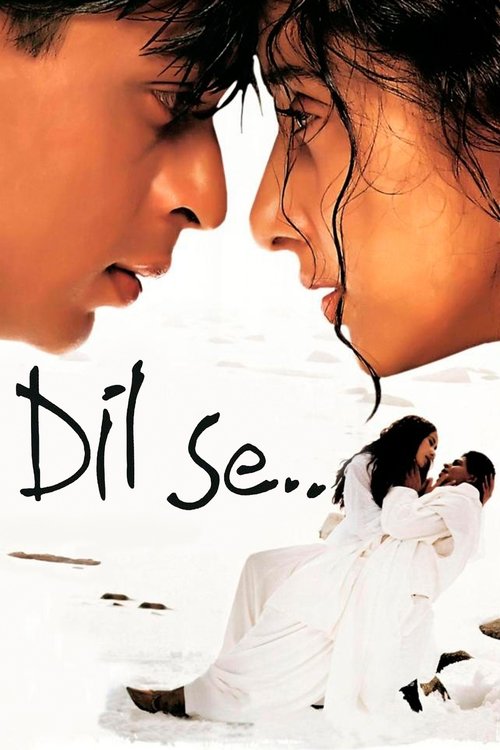
NetflixPrime VideoReleased 21 August 1998 India net Rs 10.77 cr Verdict Flop Overseas First Indian film in the UK top ten A Flop on the Indian ledger and a landmark everywhere else, in the same release. Mani Ratnam's film with Shah Rukh Khan and Manisha Koirala took Rs 10.77 crore net against a Rs 11.5 crore budget at home, where a romance built around a suicide bomber was not what a 1998 Shah Rukh audience had turned up for. Abroad it became the first Indian film ever to enter the UK box office top ten, took £537,930 there, and ran successfully in Japan. Time put it on its Best of Bollywood list in 2010. Chaiyya Chaiyya, filmed on the roof of a moving train, has outlived every argument about the film it belongs to.
10/15Dil Chahta Hai
Film · 2001 · Hindi · Jul 24, 2001
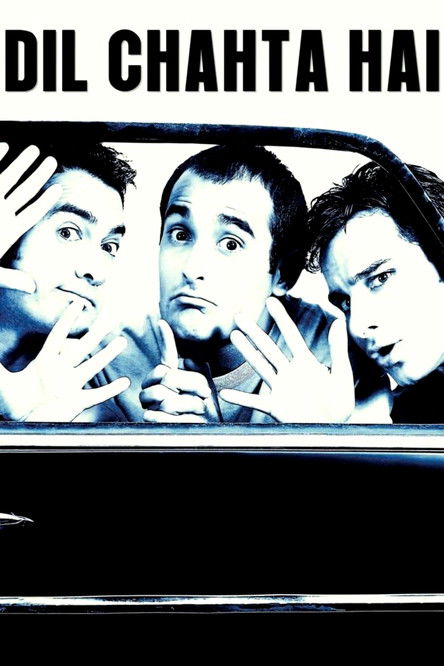
Released 10 August 2001 India net Rs 20.02 cr Verdict Average The entry that most people misremember as a hit. Farhan Akhtar's first film finished on Rs 20.02 crore net and an Average verdict in a year that Gadar took Rs 76.88 crore — it worked in the metros and did close to nothing in the single-screen markets that still decided a Hindi film's fate in 2001. What it did instead was mark the point where Hindi cinema started addressing an urban audience in its own register: the clothes, the dialogue, the idea that three friends could simply talk. Everything that gets called the multiplex film descends from it. It is on this list because the trade filed it as Average and the culture filed it as a turning point, and both filings were correct.
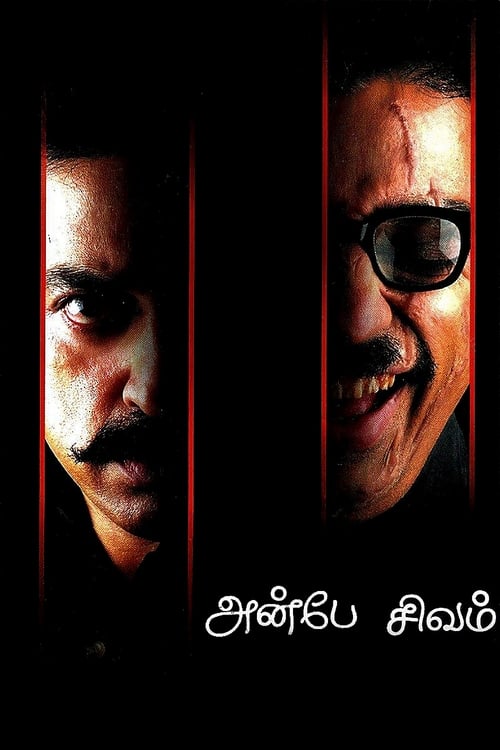
11/15Anbe Sivam
Film · 2003 · Tamil · Jan 14, 2003
Prime VideoSun NXTReleased 15 January 2003 Budget Rs 12 cr Reported losses Rs 5-6.5 cr Since The Hollywood Reporter India's 25 best Indian films of the 21st century (2025) The definitive Tamil case, and an unusually well-documented failure: The Economic Times put the losses at Rs 6.5 crore and India Today at Rs 5 crore, on a Rs 12 crore film, and the damage was severe enough that Lakshmi Movie Makers did not finance anything else for the rest of 2003. Kamal Haasan wrote it and plays a communist cartoonist arguing his way across south India with a young ad-man; it opened at Pongal against exactly the kind of film Pongal is for. The recovery has been complete. It runs constantly on Tamil television, it is the film Kamal Haasan is most often asked about, and in 2025 The Hollywood Reporter India named it one of the twenty-five best Indian films of the century.
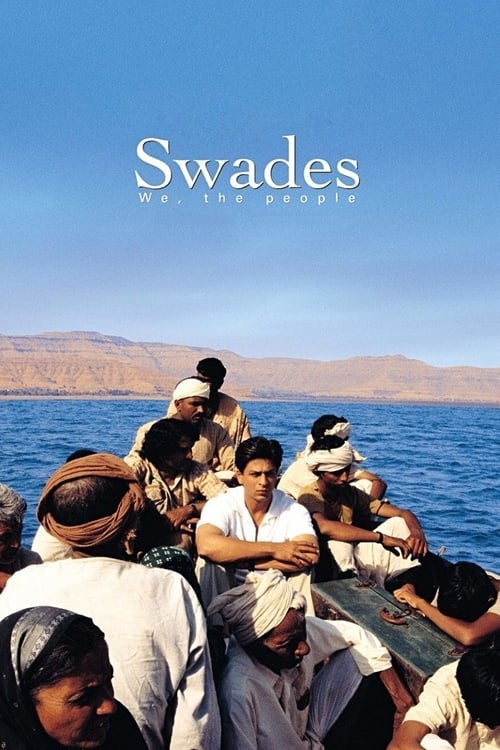
12/15Swades
Film · 2004 · Hindi · Dec 17, 2004
NetflixReleased 17 December 2004 India net Rs 16.31 cr Verdict Flop Budget Rs 25 cr Ashutosh Gowariker followed Lagaan with a three-and-a-half-hour film about a NASA engineer who comes home to fix a village's electricity supply, and it lost money — Rs 16.31 crore net against Rs 25 crore, filed as a Flop. There is no mystery about why: it is slow, it is quiet, its climax is a micro-hydel project, and it was sold on the back of an epic. The reappraisal is now so total that it is Shah Rukh Khan's most frequently cited performance among people who do not otherwise like Shah Rukh Khan films, and the train-station scene with the boy selling water is used as a shorthand for the whole argument. It was, as its Wikipedia entry puts it without much argument from anyone, ahead of its time.
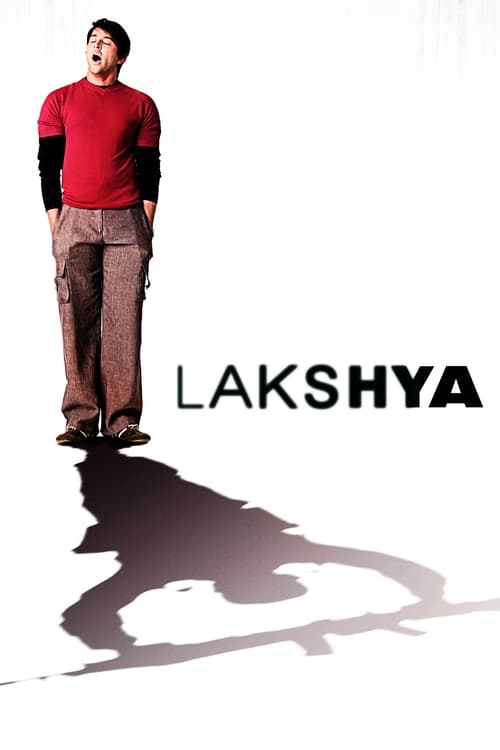
13/15Lakshya
Film · 2004 · Hindi · Jun 18, 2004
Released 18 June 2004 India net Rs 23.56 cr Verdict Flop Worldwide gross Rs 41.68 cr Farhan Akhtar's second film, released six months before Swades and failing in much the same way — Rs 23.56 crore net against a Rs 30 crore budget, a Flop. A drifting rich kid who joins the army and finds a purpose was not a proposition anyone could market in June 2004, and Hrithik Roshan was in the middle of a bad run. Twenty years of television reruns later, it is the film a large number of Indians will tell you made them consider a commission, and the performance a lot of people rate as Hrithik Roshan's best. Between this and Dil Chahta Hai, Akhtar has the odd distinction of having made two of the most influential Hindi films of the decade and having lost money on both.
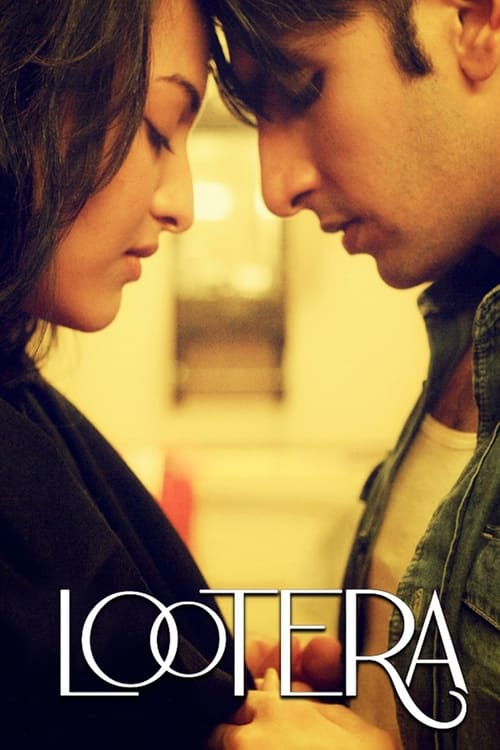
14/15Lootera
Film · 2013 · Hindi · Apr 4, 2013
Prime VideoMX PlayerReleased 5 July 2013 India net Rs 29 cr Verdict Flop Budget Rs 32 cr The most contested entry here, and worth stating both ways. Bollywood Hungama records Rs 29 crore net and a Flop verdict against a Rs 32 crore budget; Vikramaditya Motwane has since pushed back on the label directly, arguing that nobody actually lost money on it and that the problem was an expectation of a thirty-crore opening weekend for a Ranveer Singh film that a 1950s Bengal period romance was never going to deliver. Both things are true, which is the useful part. It is now the film in Sonakshi Sinha's filmography that gets taken seriously, the last twenty minutes are one of the most admired endings in modern Hindi cinema, and its reputation has done nothing but climb for over a decade.
15/15Tamasha
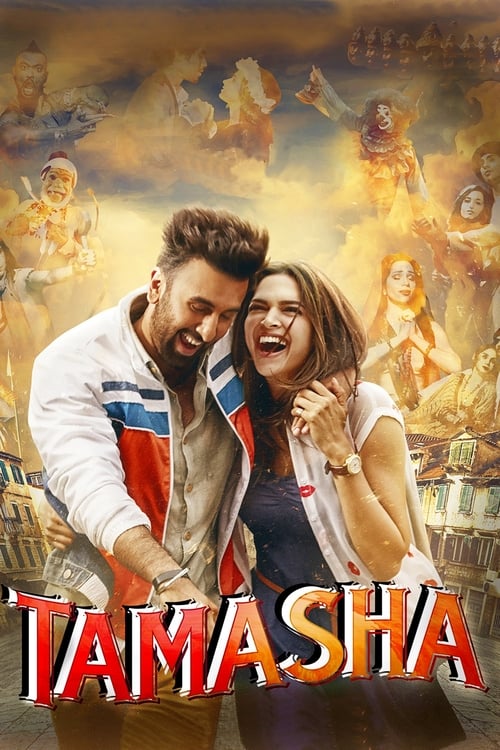
Film · 2015 · Hindi · Nov 27, 2015
Prime VideoZee5JioHotstarReleased 27 November 2015 India net Rs 67.26 cr Verdict Flop Budget Rs 87 cr The most recent case, and the one that shows the mechanism still works. Imtiaz Ali sold a Ranbir Kapoor and Deepika Padukone film as a romance, delivered a film about a man whose job has hollowed him out, and lost the audience that turned up — Rs 67.26 crore net against Rs 87 crore, a Flop. Ten years later it is a fixture of every conversation about work and identity among Indian twenty-somethings, and the anniversary pieces in 2025 all made the same point: a film about being ground down by a career you did not choose has more purchase now than it did then. It is the youngest entry on this list because reappraisals need a decade to settle, and this one has just had it.
What actually went wrong
Read fifteen of these together and the same failure keeps recurring, and it is almost never that the film was disliked. Teesri Kasam, Sadma, Iruvar, Anbe Sivam and Lootera were all reviewed well and lost money anyway. The recurring causes are structural: too few prints (Jaane Bhi Do Yaaro went out through the NFDC and was gone within a week), the wrong week (Anbe Sivam opened at Pongal, against precisely the kind of film Pongal exists for), a marketing promise the film did not keep (Swades sold as an epic, Tamasha sold as a romance, Dil Se.. sold as a Shah Rukh Khan love story), or a subject the market had no shelf for at that moment. In two cases — Iruvar and a strike, Andaz Apna Apna and a new distributor with no publicity budget — the film barely got a chance to be judged at all.
The corollary is that the recovery mechanism has been the same every time, and it is not the cinema. Doordarshan, then video, then satellite reruns, then streaming: every film on this page was made canonical by an audience that watched it at home, for free or nearly free, on a schedule the original distributor had no control over. That is why the platform tags matter on this list more than on any other we publish. The second life is the real one.
The ones that did not make the cut
Several films that get named in this conversation were tested against the rule and failed the first half of it — they were not actually flops. Udaan is the most common example: it is remembered as a film nobody went to see, and its Wikipedia entry records a commercial success, roughly Rs 33.5 crore against a Rs 5 crore budget. Athadu is remembered in Telugu as underrated and was one of the highest-grossing Telugu films of 2005 at release. Both are films whose reputation has grown enormously; neither was a failure, and putting them here would have meant reporting a myth as a result.
Others failed the second half. Bombay Velvet is a genuine disaster on the ledger — Rs 23.67 crore net and a Flop — and no durable reappraisal has arrived in the decade since. Gangs of Wasseypur has a real cult and a contested commercial record (Average for the first part, Flop for the second) but the two halves make it awkward to file as one entry. And anything from the last eight or nine years is excluded on principle: a reappraisal needs about a decade to stop moving, which is why Tamasha, at ten years, is the youngest film on the page.
A note on the word flop
Every verdict quoted here is a trade filing about money, made at the time by people whose job was to advise distributors, and it is worth being precise about what it means. Bollywood Hungama's Average is not a synonym for bad and its Flop is not a synonym for unwatched — Tamasha took Rs 67.26 crore net and is still a Flop, because it cost Rs 87 crore. Lootera is the clearest illustration: it carries a Flop verdict, and its director's position is that nobody actually lost money on it and the label came from an expectation of a Ranveer Singh opening weekend the film was never designed to deliver. Both statements are on the record and both are in the entry. A verdict measures a film against its budget in one particular month, and it was never built to survive thirty years of hindsight.
Frequently asked
- Which Indian film is the most famous flop-turned-classic?
- Andaz Apna Apna, on most measures. It was pulled from cinemas as a commercial failure in late 1994 — Bollywood Hungama records Rs 5.30 crore and an Average verdict — and has since become the most quoted Hindi comedy ever made, voted the second-best Bollywood comedy of all time in a 2014 Indian Express poll and restored in 4K for a theatrical re-release in April 2025, thirty-one years after it first came out.
- What was the biggest financial disaster on this list?
- Mera Naam Joker, by consequence rather than by the size of the number. Raj Kapoor spent six years on it and, in his son Rishi Kapoor's account, mortgaged all of R.K. Films' assets to release it in December 1970. It failed at 248 minutes and nearly took the studio with it. It was rescued abroad — the Soviet release in 1972 split it into three parts and drew 73.1 million admissions.
- Did any of these films fail because they were badly received by critics?
- Very few. Teesri Kasam, Sadma, Iruvar, Anbe Sivam and Lootera were all well reviewed at release and still lost money. The recurring cause is distribution and timing, not reception: too few prints, the wrong week, a subject the market had no slot for, or in Jaane Bhi Do Yaaro's case an NFDC release that could not get it into enough cinemas to be seen.
- Are Swades and Lakshya really flops?
- Commercially, yes, and by the trade's own filing. Bollywood Hungama grades Swades a Flop at Rs 16.31 crore net against a Rs 25 crore budget, and Lakshya a Flop at Rs 23.56 crore against Rs 30 crore. Both are now routinely listed among the best Hindi films of the 2000s, and both have had far longer second lives on television and streaming than they ever had in cinemas.
- Where can I stream these films in India?
- Most of them are available, and the platform tag on each entry shows where that title was streaming in India on the date this page was published. Follow a title link for the current position — the older Tamil and Malayalam titles in particular move between services more often than the Hindi ones.
Sources
- Bollywood Hungama — Box Office Collections16 Aug 2026— Lifetime India net and trade verdict for Hindi releases, accessed 16 August 2026.
- Wikipedia — Kaagaz Ke Phool— Commercial failure, Abrar Alvi's account, and the Sight & Sound, BFI and Time Out placings.
- Wikipedia — Teesri Kasam— Commercial failure and the National Film Award for Best Feature Film.
- Wikipedia — Mera Naam Joker— Failure at release, Rishi Kapoor on the mortgaged assets, the Soviet release and admissions, and the Filmfare awards.
- Wikipedia — Sadma— Commercial failure at release, Filmfare nominations and later cult status.
- Wikipedia — Jaane Bhi Do Yaaro— Budget, the National Film Award for Best Debut Direction, and the 2012 restored re-release.
- DNA India — the low-budget film that is now a cult classic— Reports the film was off screens within a week of release.
- Wikipedia — Thoovanathumbikal— Commercial failure at release and the 2013 IBN Live centenary poll placing.
- Wikipedia — Andaz Apna Apna— Budget, Rajkumar Santoshi on the distribution, the 2014 Indian Express poll and the 2025 4K re-release.
- Wikipedia — Iruvar— The 1997 FEFSI strike, National Film Awards, the Sight & Sound 2012 ballot and the 2025 Academy Museum screening.
- Wikipedia — Dil Se..— Budget, the UK top-ten record, overseas performance and the Time 'Best of Bollywood' listing.
- Wikipedia — Anbe Sivam— Budget, the reported losses from The Economic Times and India Today, and the 2025 Hollywood Reporter India listing.
- Wikipedia — Swades— Budget and worldwide gross, as aggregated there from published trade reports.
- Wikipedia — Lakshya— Budget, worldwide gross and the later cult following.
- Wikipedia — Lootera— Budget and Vikramaditya Motwane's own account of the film's finances.
- Wikipedia — Tamasha— Budget, worldwide gross and the later cult status.
- Wikipedia — Udaan (2010 film)— Cited below the list for the commercial result that keeps it off it.